
Site Map and User Flow
Assignment Purpose
This assignment evaluates your ability to model structure before interface.
You will demonstrate:
Spatial organization of meaning (Information Architecture)
Temporal progression of action (User Flow)
Explicit system logic (Backstage / System Model awareness)
You are to model:
Objects
Relationships
Hierarchy
State transitions
Decision logic
Permissions
Business rules
Deliverable Overview
Submit one structured package that includes the following:
Site Map (Information Architecture Model)
Primary User Flow (Temporal Logic Model)
Backstage / System Annotations
Structural Reflection (AI Agents + Revision Decisions)
Part 1 — Site Map
(Spatial Structure of the System)
15 Points
Your Site Map must reflect the Information Architecture lenses covered in class. A Site Map is:
A hierarchical representation of your system’s Taxonomy and Hierarchy — not a navigation mockup.
The Site Map must demonstrate:
Clear Taxonomy (conceptual grouping logic)
Intentional Hierarchy (priority and dependency)
Coherent Labeling (mental model alignment)
Structural Stability (no unnecessary redundancy or scope creep)
Required Elements
Your Site Map must:
show primary and secondary groupings
reflect structural priority (what is primary vs subordinate)
avoid conceptual overlap between categories
use clear, user-aligned labels
include brief notes explaining at least two structural decisions (Structural Rationale)
Examples
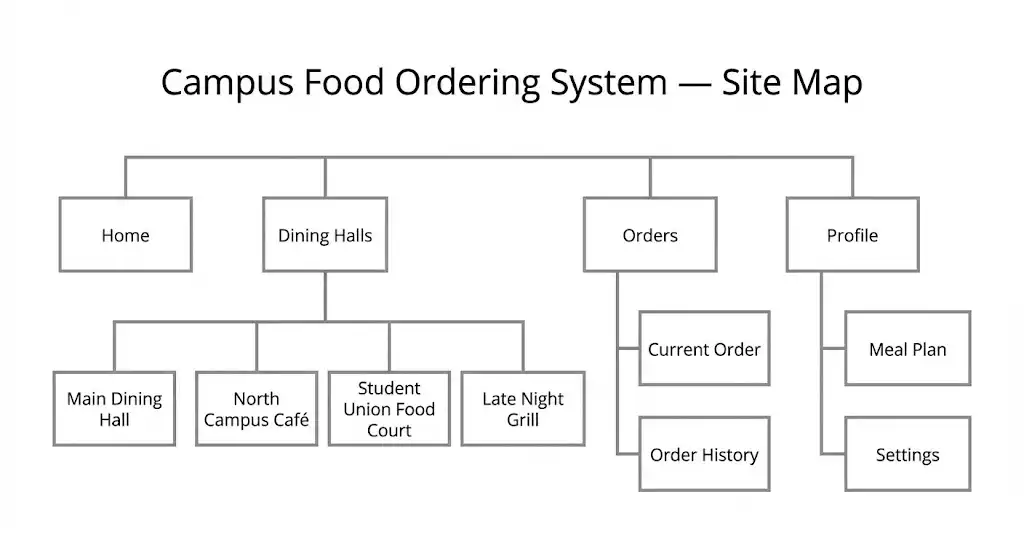
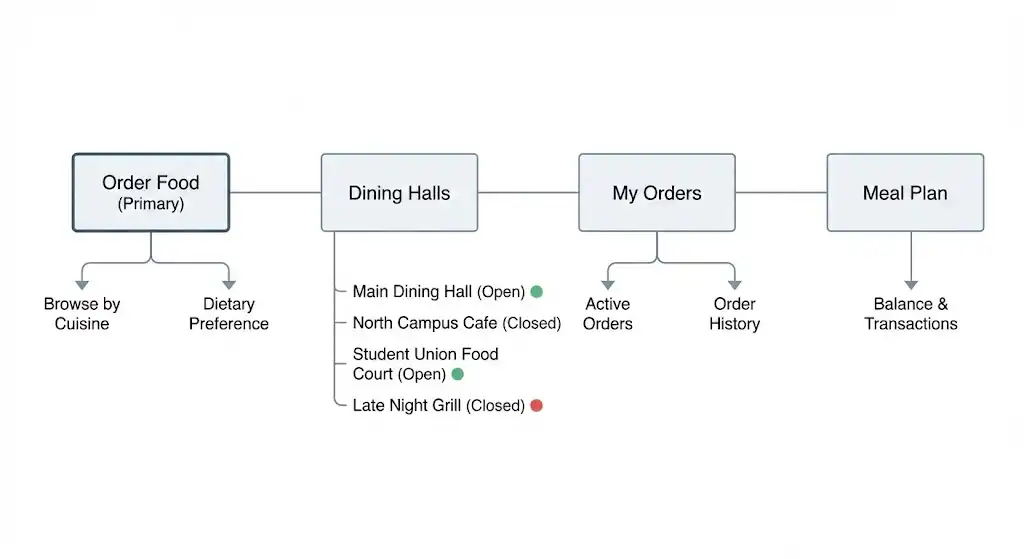
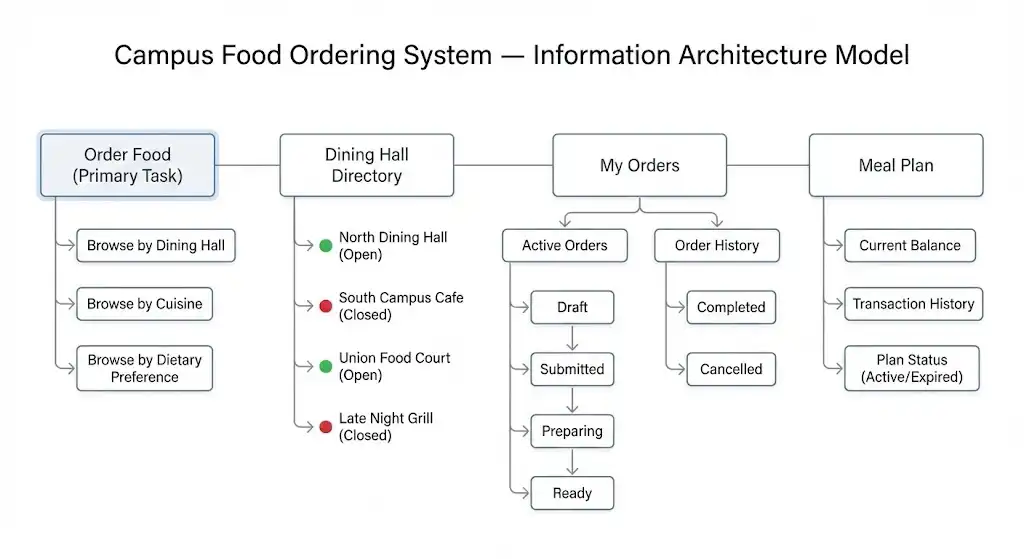
Evaluation Criteria — Site Map (15 pts)
Criteria | Points |
Clear Taxonomy (groupings are conceptually distinct; no overlap) | 5 |
Logical Hierarchy (priority and dependency are visible) | 4 |
Labeling Clarity (mental model alignment) | 3 |
Structural Rationale (explains why at least two IA decisions were made) | 3 |
Part 2 — User Flow Diagram
(Temporal Logic of a Core Task)
15 Points
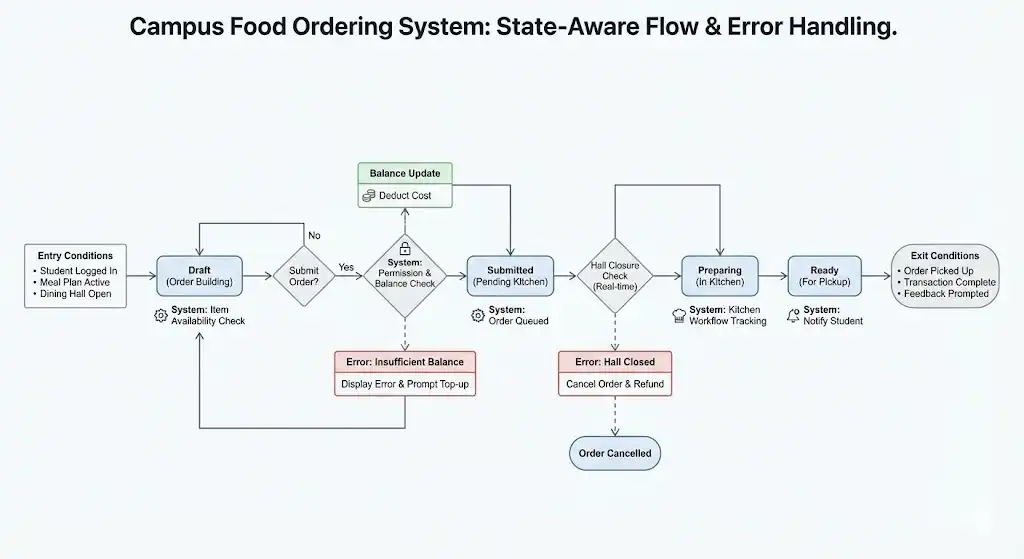
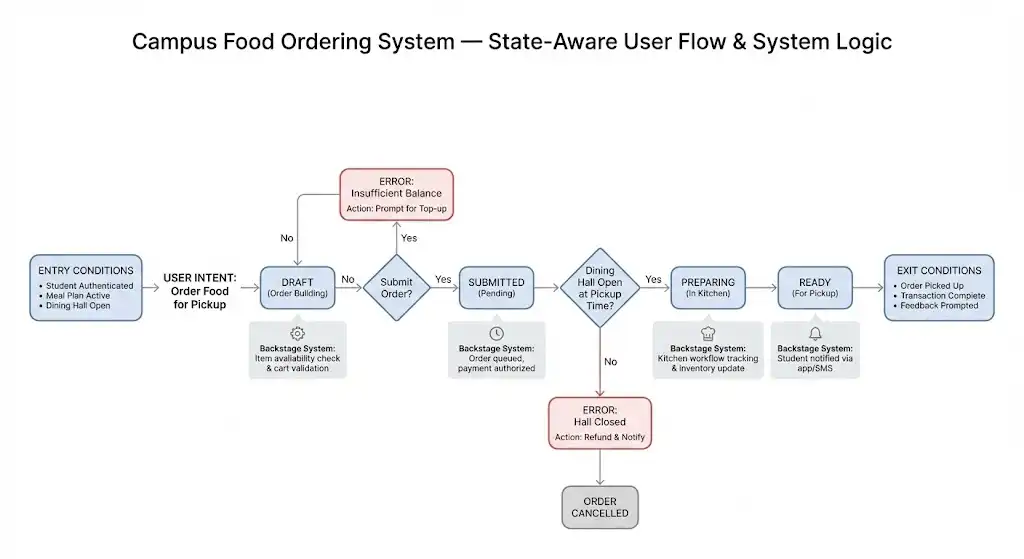
You will model one primary task using the Six Structural Flow Elements introduced in class.
A User Flow is:
A temporal model of how user intent progresses through decision nodes, state transitions, and constraints.
Required Structural Elements
Your flow must explicitly include:
Entry Conditions
User Intent
At least 2 Decision Nodes
Explicit State Transitions
At least 2 Error / Exception Conditions
Clear Exit Conditions
If these elements are not visible, the flow is structurally incomplete.
Examples
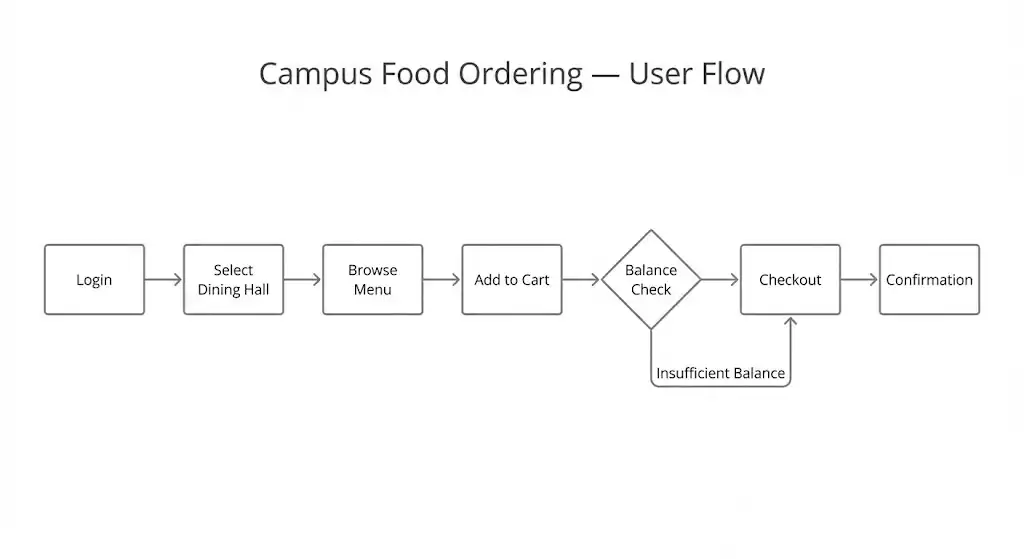
Evaluation Criteria — User Flow (15 pts)
Criteria | Points |
Entry + Exit Conditions Defined | 3 |
Decision Nodes + Branching Logic | 3 |
State Transitions Explicitly Modeled | 4 |
Error / Exception Conditions Included | 3 |
Overall Logical Coherence | 2 |
Part 3 — Backstage / System Actions
(System Model Awareness)
5 Points
You must annotate what happens behind the interface. These will typically be included in your flow diagrams (see below). Backstage / System Actions include:
Data updates
Object state changes
Permission enforcement
Business rule validation
System-triggered transitions
These may be:
Integrated directly into your flow diagram
Or shown in a parallel annotation column
This portion demonstrates that you are modeling:
System Model → Flow → Interface dependency.
Evaluation Criteria — Backstage Awareness (5 pts)
Criteria | Points |
System State Awareness (object state logic acknowledged) | 2 |
Permissions / Business Rules Modeled | 2 |
Backstage Clarity (annotations are explicit and legible) | 1 |
Part 4 — Structural Reflection (AI Agents)
5 Points
You must select 3 AI Agents from the approved list. For each agent:
Identify one structural weakness they revealed.
Describe what you revised (or why you chose not to revise).
Demonstrate structural reasoning.
Remember, AI is a structural review board — not a generator.
Evaluation Criteria — Reflection (5 pts)
Criteria | Points |
Three Agents Used Appropriately | 2 |
Structural Weaknesses Identified | 2 |
Revision Justification Clear | 1 |
Grading Summary
Component | Points |
Site Map (IA — Spatial Structure) | 15 |
User Flow (Temporal Logic) | 15 |
Backstage / System Actions | 5 |
Structural Reflection (AI Agents) | 5 |
Total | 40 |
Structural Self-Check Before Submission
Before submitting, ask:
Is my Site Map showing conceptual grouping (Taxonomy) or just navigation?
Is my Hierarchy intentional?
Does my flow model state changes, or just movement?
Have I modeled at least two realistic error conditions?
Are backstage/system actions visible?
Does every structural decision have a rationale?
If the answer to any is “no,” please revise before you submit.
Key Objectives Summary
This assignment stabilizes your system before you move into:
Ideation (concept generation)
Low-Fidelity Structural Wireframes
Interaction pattern design
If structure is unstable now, interface design will become reactive later.
Model before interface.
Locked Message